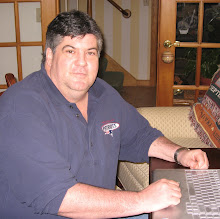
In the field of criminology, there exist an exhaustingly high number of theories that attempt to explain the reasons for criminal behavior. Among them are: biological, genetic, learned, environmental, and psychological, to name a few. One can find a degree of validity in each but, in my opinion, few provide us with a direct correlation between child abuse and juvenile crime, with the exception of one. Dr. Lonnie Athens, viewed by many as a maverick, devised a unique method to study the criminal mind. His method, coupled with his life experiences, is presented in Richard Rhodes’ book "Why They Kill." For the purpose of this article; I will focus on the effect child abuse has in the creation of juvenile offenders. It should come as no surprise that I gravitated toward, and embraced the theory of a maverick.
A brief history of Lonnie Athens is necessary to help us understand how and why his theory differs from those presented by such respected and well known criminologists as Joseph Wilson, Richard Herrnstein and Charles Murray. Unlike the others; Athens was a victim of abuse from his father, a Greek immigrant. According to Rhodes, it is not uncommon for some who are victims to seek explanations. “Hypervigilance is in any case one price children pay for childhood abuse.” (Rhodes, pg. 14) While the majority of criminologists rely on various statistics and other forms of empirical data; Athens chose to take a more hands-on approach. From Rhodes:
"Much later Athens would write scornfully of academic criminologists who present themselves as experts on criminal violence without ever had personal experience of such violence or contact with violent criminals. Their usual rebuttal to his challenge, he noted, was that “one need not actually have heart trouble or some other terrible disease to discover a cure for it.'That was true, he agreed,'but one must at least see, touches, smell, and examine actual diseased hearts if he ever hopes to know anything about them.' Athens had certainly seen, touched, smelled and examined more than enough violence in his tumultuous childhood to know what he was talking about."
I plan to address Athens’ approach in a future article but for the sake of brevity; I will focus on the theory itself. His theory on “Violentization” is composed of 4 stages. The first stage being Brutalization which translated refers to various forms of abuse. The first form, Violent Subjugation, concerns the most common and recognized cases of child abuse. “During this experience, bona fide or would be authority figures from one of the subject’s primary groups uses violence to force her to submit to their authority.” (Athens, L. (1992) The Creation of Dangerous Violent Criminals. Pg. 28)
Athens refers to the second form of brutalization as Personal Horrification. This has proven to be equally damaging but is rarely presented to the public by the media. The absence of sensationalism is a likely explanation for its absence. “Here the subject does not himself undergo violent subjugation, but witnesses another person undergoing it.” (Athens, pg. 38) The long term effects of personal horrification are considered to be equally contributory to eventual juvenile crime and beyond. Both forms instill a sense of helplessness in the child.
The third and final form of brutalization is Violent Coaching. This form is far more common than most would think. I was fortunate in the sense that I was never subjected to any of these brutalization practices but witnessed violent coaching on more than one occasion. Once again, I will defer to Dr. Athens to explain this form. “Novices are taught that they should not try to pacify, ignore, or run from their protagonist, but should personally attack them” It is little wonder that the transition from Phase1-Brutalization, to Phase 3-Violent Performances, is both understandable and almost natural. My intention is not to condone this metamorphosis but attempt to explain it. Dr. Athens himself is evidence that not all children follow this path however its influence is indisputable.
I chose to skip Stage 2-Belligerency, for the simple fact that I don’t wish to lengthen this article any more than is necessary (in other words, I don’t want to bore you). My intention is not to minimize the importance of Stages 2 and 4-Virulency, which is why I strongly recommend anyone interested to purchase Dr. Athens’ book. As previously stated, the transition from brutalization to violent performances is understandable and illustrates the need to recognize and address abuse as early as possible. “The subject, now belligerent, awaits only the proper circumstances to test his newly developed resolve to attack people physically with the serious intention of inflicting grave injury upon them.” (Athens, pg. 63) It is reasonable to argue that, at some point, we are all capable of distinguishing right from wrong. It is also reasonable to argue that a juvenile who has been subjected to years of violent subjugation, personal horrification, and violent coaching does not necessarily possess the capability to differentiate between the two. What they perceive to be “normal” can be vastly different from what is socially acceptable behavior.
The purpose of this article is to draw attention to the implications of ignoring the plight of abused children. The longer a child is subjected to any kind of abuse; the greater the cost is to society. My friend Mike Tikkanen writes in his book Invisible Children: “Nationally, four years is the average length of time for sexual abuse of a child within a toxic family before they are removed.” Four years of any form of abuse will inevitably lead to psychological problems that may require therapy. The likelihood that many will turn to crime further adds to the cost, not to mention the danger that will be incurred. Programs and services designed to prevent and address these issues are the first to be slashed by our short-sighted legislators. Perhaps if they took the time to consider the long-term effects and costs that result from their ignorance; they may look elsewhere when confronting budgetary woes.
I strongly recommend that anyone interested or concerned purchase the following books:
1)The Creation of Dangerous Violent Criminals by Lonnie H. Athens. Available at Amazon for $20.00
2) Invisible Children by Mike Tikkanen. Available at www.invisiblechildren.org for $16.95
www.invisiblechildren.org
Showing posts with label juvenile crime. Show all posts
Showing posts with label juvenile crime. Show all posts
Wednesday, September 2, 2009


Thursday, August 27, 2009
RAGE-Adoloscent Illiteracy
I received a phone call Monday from a gentleman from Minnesota. Since I have redirected my focus from politics to child abuse and juvenile justice issues; I have been in touch with people from an organization called Invisible Children (www.invisiblechildren.org) and KARA (Kids at Risk Action). Bob, the gentleman from Minnesota, is an active member of these organizations. To say he is passionate about these issues would be a gross understatement. We talked about a number of topics but one issue was particularly important to Bob (not to minimize the others)-literacy. I confess the fact that this is a major contributing factor to juvenile crime had completely escaped me. After our conservation, I decided to look into this further. Suffice it to say: Bob “knows of what he speaks.”
I would like to begin with a quote from the State Superintendent of Wisconsin regarding literacy. (http://dpi.wi.gov/pld/pdf/statesuperadolit-highlights.pdf)
“At its core, literacy is the ability to read and write. While this ability remains the nexus of literacy of adolescents, additional abilities are needed to maximize learning in all content areas. In Wisconsin, we must infuse this core with the ability to invent, design, create, compute, and communicate so that adolescents can make critical judgments, solve real-world problems, and become productive citizens who lead rewarding lives.”
While researching the correlation between illiteracy and delinquency, I came across a paper by Lois S. Mohr-Corrigan entitled "Illiteracy and Juvenile Delinquency." In this paper, a series of studies and interviews were used to help explain, not justify, how illiteracy can lead to frustration and anger in youths. “Aggression is one of many emotions harbored by illiterate adolescents.” Their inability to express themselves leads them to delinquency as a means to release their anger. Michele Kipke, a source cited in the paper, explains how the pressure of being accepted during adolescence can adversely affect an individual throughout the course of their life. “…once shunned as an outcast for not fitting in, those feelings can follow an illiterate person around for the rest of his or her life, affecting every facet with its negativity.” It is here that teachers and other school officials can provide support to those affected. School is often the starting point for future successes and failures.
After studying Criminal Justice in college, my interest in the various theories explaining juvenile behavior prompted me to purchase a number of books concerning the varying theories. One of the books I purchased is entitled "Child and Youth Security Sourcebook." “Effective schools convey the attitude that all children can achieve academically and behave appropriately, while at the same time appreciating individual differences…Students who do not receive the support they need are less likely to behave in socially desirable ways.” Once again, the significance of recognizing and dealing with illiterate students is magnified. I daresay we have failed to do either in an effective manner.
While President Bush’s No Child Left Behind Act gave the impression that the government was taking a more active role in improving education; it did little for the illiterate. Encouraging states to elevate their testing standards may have benefited those proficient in reading and writing skills; it exposed those with learning disabilities and the illiterate. This may have proven to be advantageous if the schools were equipped to address these problems but that was simply not the case. In 2002, $24.4 billion was earmarked for the new project. A paltry $1.2 billion was allocated for basic reading programs in 2002 which was a considerable increase from the amazingly low $286 million available in 2001.
Attending to the special needs of illiterate students has long been the purview of school counselors. Perhaps a portion of the aforementioned $24.4 billion should have been diverted to the American School Counselor Association. “Although ASCA recommends a 250 to 1 ratio of students to school counselors (WOW!), the national average is actually 475 (2006-2007) school year.” (http://www.schoolcounselor.org/content.asp?contentid=460) In the state of Illinois, the ratio is 1172 to 1!! Only 4 states have managed to adhere to the 250 to 1 ratio. Is it any wonder that thousands of illiterate children are allowed to “fall through the cracks”? Research has consistently shown that poor academic achievement contributes to crimes committed by delinquents.
In my conversation on Monday; Bob expressed his frustration concerning the absence of rage regarding illiteracy. His desire for societal rage; rage akin to that prevalent during the civil rights movement, is understandable. My research has opened my eyes to the blatant disregard for thousands of youths. The fact that this apathy has led to the incarceration of so many has certainly infused a rage within me. I would like to close with a quote from Michael S. Brummer, Visiting Fellow at the U.S. Department of Justice.
“The link between academic failure and delinquency is strong…Schools are apparently contributing to the delinquency problem by continuing to provide traditional programming that…leaves many students, after six years of instruction, unable to read accurately, fluently, and effortlessly with comprehension…What brings about the delinquency is not the academic failure per se, but sustained frustration which results from continued failure to achieve selected academic goals.” Derived from Brummer’s book "Retarding America: The Imprisonment of Potential."
www.invisiblechildren.org
Subscribe to:
Posts (Atom)